
WhatsApp Receptionist Versus Live Answering
WhatsApp receptionist versus live answering: compare cost, speed, customer experience and fit to choose the right cover for your small business needs.
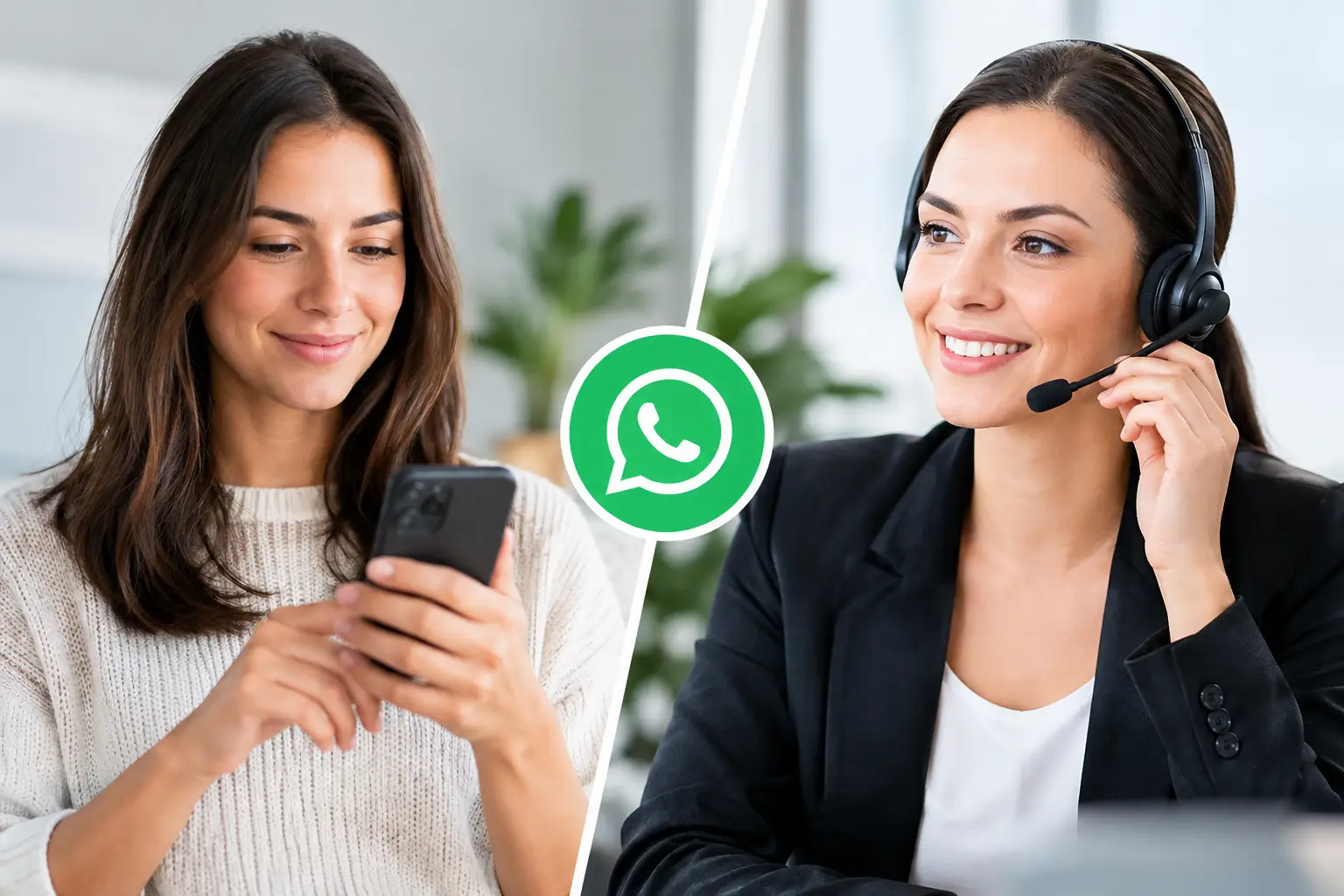
A missed enquiry is rarely just a missed message. For a salon, it may be a last-minute colour appointment that goes elsewhere. For a plumber, it could be an urgent call made while they are under a sink. For a consultant, it may be the first contact from a high-value client. The choice between a WhatsApp receptionist versus live answering comes down to how your customers prefer to get in touch, what they need at that moment, and how much of the process can be handled consistently without pulling you away from your work.
Neither option is automatically better. A live answering service adds a human voice when reassurance matters most. A well-built WhatsApp receptionist gives customers an immediate, useful response at any hour, while keeping bookings and customer details organised. The right answer is often more practical than ideological.
WhatsApp receptionist versus live answering: the real difference
Live answering means a trained person answers incoming phone calls on your behalf. They can take a message, follow a script, triage an enquiry or book work into your diary, depending on the service you choose. Its main strength is conversation. A caller with an unusual situation can explain it in their own words and feel heard straight away.
A WhatsApp receptionist is a digital front desk inside a channel many customers already use every day. It can reply instantly to common questions, collect the details needed for an enquiry, share availability, direct customers to the right service and hand a conversation over when human help is needed. It can also keep the exchange connected to your wider customer records rather than leaving details scattered across call notes and inboxes.
The distinction is not simply human versus AI. It is about the type of work being handled. Repetitive questions, booking requests, opening times, pricing ranges and appointment changes are often better suited to an automated WhatsApp flow. Sensitive complaints, complex quotes, distressed callers and urgent situations may need a person from the outset.
Customers care about speed, not your software stack
Small-business owners are often told they need another app, another inbox or another subscription to improve response times. Usually, they do not. They need a clear route from enquiry to action.
A customer messaging at 9.30pm may not expect a full consultation. They do expect acknowledgement and a sensible next step. A WhatsApp receptionist can ask what service they need, their preferred date, location where relevant and the best way to contact them. By morning, you have a properly qualified enquiry instead of a vague missed call.
Phone calls work differently. Someone ringing a locksmith, emergency electrician or care provider may need to speak to somebody immediately. A menu of automated questions can feel wrong when the customer is worried, in a rush or unable to type. Live answering earns its place when a calm, capable voice helps turn urgency into confidence.
Think about your actual customer behaviour rather than the channel you personally prefer. If most leads arrive through WhatsApp, Instagram messages or website chat, paying for constant telephone cover may solve the wrong problem. If your work generates urgent calls throughout the day, messaging alone may leave valuable enquiries waiting.
Cost is more than the monthly fee
Live answering services are usually priced around call volume, call handling time or service level. That can be worthwhile, but costs can rise as the business grows or as calls become more involved. You are also paying for availability even during periods when few calls lead to booked work.
A WhatsApp receptionist has an upfront build element because it should reflect the way your business actually operates. It needs the right questions, tone of voice, booking rules, escalation points and connection to your customer workflow. Once in place, it can deal with many simultaneous conversations without a cost attached to every extra minute of routine qualification.
That does not make automation free of responsibility. Someone still needs to own the exceptions. If a customer asks for something outside your standard service, needs a tailored quote or has had a poor experience, they should not be trapped in an endless loop. The best systems make it obvious when and how a real person will take over.
The more useful comparison is cost per useful outcome: confirmed booking, qualified lead, saved admin time or recovered customer. A cheap service that records names but does not move people towards an appointment can become another layer of admin. A system built around your booking process can reduce it.
Where live answering is the stronger choice
Live answering is particularly valuable where calls are emotionally charged, urgent or difficult to standardise. Healthcare-adjacent services, legal enquiries, emergency repairs, property issues and premium professional services often benefit from a real conversation at first contact.
It can also be the right choice if your customer base strongly prefers calling, perhaps because they are less comfortable using messaging or because the service involves a detailed diagnosis. A good receptionist can ask follow-up questions naturally, spot uncertainty and adapt their wording in a way even a well-designed automated flow cannot always match.
There is a quality threshold, though. The person answering needs to understand your business well enough to sound like an extension of it. If they repeatedly promise work you do not offer, misunderstand your service area or cannot see your availability, the human touch quickly becomes an expensive frustration.
Where a WhatsApp receptionist makes more sense
A WhatsApp receptionist is a strong fit for businesses that receive frequent, similar enquiries and need to respond while serving customers, travelling between jobs or working outside standard office hours. Beauty professionals, clinics, restaurants, trades, fitness businesses and local services often see this pattern every week.
It is especially effective when the next step is clear. A customer wants to check availability, request a table, ask about a treatment, send photos of a job, move an appointment or find out what happens next. Instead of waiting for you to finish a job, they can provide the key information straight away.
The benefit is not just speed. A properly connected system can keep records tidy, trigger reminders, flag incomplete enquiries and support follow-up after a visit. That creates a more professional experience without asking you to monitor your phone all day. At EKKO, this is the principle behind building customer workflows around the way a business already works - premium feel, no unnecessary complexity.
WhatsApp should not be treated as a dumping ground for messages. It works best when there is a defined route for booking, a clear handover process and an agreed response expectation for the conversations that need you personally.
The most practical answer may be both
For many growing businesses, the best model is not a contest between channels. It is a clear division of responsibilities.
WhatsApp can handle routine enquiries, collect booking details, confirm appointments and follow up after a service. Live answering can cover urgent phone calls, complex queries and callers who need reassurance. Both routes should feed into the same customer view, so nobody has to repeat themselves when the conversation moves from a message to a call.
This approach also protects your time. Rather than answering every question manually, you can focus on the enquiries where your expertise makes the difference. Meanwhile, customers still receive a prompt, useful response when they contact you.
Before choosing, look at a fortnight of real enquiries. How many came by phone? How many arrived outside working hours? Which questions do you answer repeatedly? How many needed a genuine conversation before booking? The answers will show whether you need more human cover, better automation or a combination of the two.
Build for the moment after the first reply
The first response matters, but what happens afterwards matters more. An enquiry should become a confirmed appointment, a clear quote request, a callback task or a polite decline where the work is not right for you. If it simply becomes another unread message, neither live answering nor WhatsApp has solved the underlying problem.
Choose the option that gives your customers the right level of help and gives you a reliable next action. Start with the enquiries you are missing most often, then build the process around them. That is how a receptionist, human or digital, becomes useful rather than just another cost.
Need this built for your business?
EKKO builds affordable websites, custom CRMs and automated follow-up systems for small businesses, sole traders and startups. Contact us for a custom quote.
More from the EKKO Journal
A Guide to Managing Online Reputation for Small Businesses
Use this guide to managing online reputation to earn trust, respond well to reviews and turn everyday customer feedback into more bookings with care.
Home Services Automation Case Study That Works
This home services automation case study shows how a joined-up booking, reminder and review process can save time, protect jobs and bring customers back.
Bespoke CRM Versus Spreadsheets: Which Works?
Compare bespoke CRM versus spreadsheets for your small business. See when each works, where spreadsheets fall short, and how to choose without extra cost.