
Bespoke Websites Versus Templates for Small Firms
Bespoke websites versus templates: compare cost, control and growth potential, then choose a site that supports how your small business works every day.
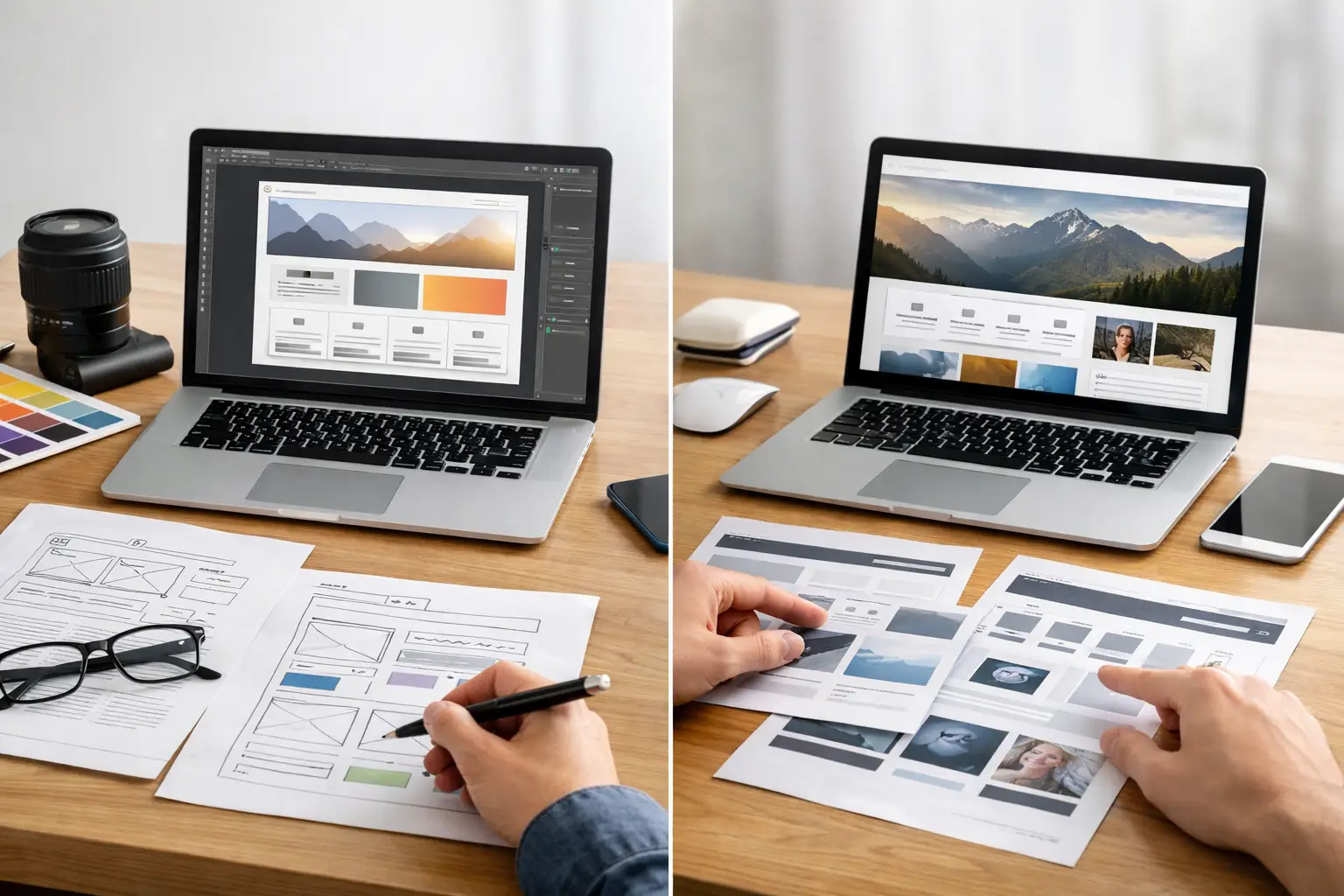
A website can look polished and still leave money on the table. If a customer cannot quickly find your services, ask a question, book a slot or trust that you are the right choice, the design has not done its job. That is the real question behind bespoke websites versus templates: not which option sounds more impressive, but which one helps your business operate better.
For a sole trader or small team, the answer is rarely as simple as “custom is good, templates are bad”. A template can be a sensible starting point. A bespoke site can be a far better investment when your customer journey, admin process or growth plans need more than a standard layout can provide.
Bespoke websites versus templates: the practical difference
A website template is a pre-built design framework. You choose a style, add your words and images, adjust colours, then publish. Most modern website platforms offer plenty of templates, and many are good-looking enough to get a new business online quickly.
A bespoke website is planned and built around your business. That does not only mean a different colour palette or a logo placed in the header. It means the page structure, calls to action, booking route, enquiry forms, customer information and behind-the-scenes processes are designed around the way you actually work.
For example, a beauty clinic may need visitors to choose a treatment, practitioner, location and appointment time. A local trades business may need a fast quote form that collects photos, postcodes and job details before a call-back. A consultant may need a simple way to qualify enquiries, book discovery calls and share relevant case studies. These are different journeys. One generic website structure will not serve all of them equally well.
The difference becomes clearer after launch. A template gives you a website. A bespoke build can give you a working part of your business infrastructure.
When a template is the sensible choice
Templates have a place, particularly when speed matters more than complexity. If you are testing a new idea, have a very limited budget or simply need a credible online presence for a straightforward service, a well-chosen template can do the job.
They are also useful where your needs are unlikely to change soon. A freelancer with a small portfolio, a clear contact route and no booking requirements may not need a custom build on day one. In that case, spending heavily before demand is proven may not be the best use of cash.
The strongest template sites are kept deliberately simple. They have clear service pages, genuine photography or strong brand assets, a visible phone number or enquiry route, and copy that answers the questions customers ask before getting in touch. The template is not the issue. Trying to force a complex business into it often is.
There are trade-offs. Templates can encourage businesses to accept the default: generic page layouts, broad contact forms and awkward workarounds for bookings, customer follow-up or payments. The monthly cost may look low, but the time spent manually chasing enquiries, moving information between tools and answering repeat questions soon adds up.
Where templates start to hold a business back
The warning signs are usually operational rather than visual. You may have an attractive site but still receive vague enquiries that require several messages to qualify. Customers might book through one platform, receive reminders from another and leave reviews only if someone remembers to ask. Your customer data may be spread across a website inbox, WhatsApp, spreadsheets and separate software subscriptions.
At that point, the website is acting like a brochure while you are doing the hard work manually behind it.
A template can also limit credibility in competitive sectors. If five local providers use similar layouts, stock imagery and the same wording structure, it is harder for customers to see why they should choose you. A premium feel does not require unnecessary animation or expensive agency theatre. It comes from clarity, confident presentation and a journey that feels considered from the first click.
Flexibility matters too. Many templates allow edits, but not always the edits that matter. Adding a new service flow, connecting a tailored CRM, changing how leads are assigned or creating a dashboard for outstanding enquiries can become difficult or costly when the original system was not built for it.
What a bespoke website should actually deliver
A bespoke website is not automatically worthwhile because it is custom. It needs to solve real problems. Before a build begins, the useful questions are practical: How do customers currently find you? What information do you need before giving a quote? Where do enquiries get delayed? Which jobs or services are most profitable? What should happen after someone books, buys or gets in touch?
The answers shape the build. For a restaurant, that could mean clear menus, reservation prompts and private feedback after a visit. For a home services business, it may mean job-specific forms, automated acknowledgement messages and reminders for annual maintenance. For a wellness provider, it could mean treatment information, online booking, pre-appointment guidance and rebooking prompts.
A well-planned bespoke site can connect these moments without making the customer feel they are being pushed through a complicated system. They make an enquiry, receive a prompt response, get the relevant next step and are not forgotten after the job is complete.
This is where a tailored website can reduce software clutter. Rather than paying for separate tools that do not speak to each other, a business can create a joined-up flow between website enquiries, customer records, appointment reminders, follow-up messages and review requests. The goal is nothing more than less admin, quicker responses and fewer missed opportunities.
Cost is not just the price of the build
Templates usually win on upfront price. That is their main advantage, and it is a valid one. A subscription and a few hours of setup can feel far easier to approve than a fixed-scope custom project.
But the better comparison is total cost over time. Consider what happens when a lead has to be copied manually into a spreadsheet, when an appointment reminder is forgotten, or when a happy customer is never asked for a Google review. Consider the cost of paying for several subscriptions because each one handles one small part of the journey.
Bespoke work costs more at the beginning because it includes discovery, planning, design, development and testing. It should also be clear what is included, what is not, and what support looks like after launch. Small businesses do not need vague proposals or a never-ending list of add-ons. They need a defined outcome and someone who can explain it plainly.
The right investment depends on volume. If you receive a handful of enquiries a month and manage them easily, automation may be premature. If you are regularly losing track of leads, repeating the same messages or relying on memory to keep customers coming back, the return can be much clearer.
How to choose without overbuilding
Start with the customer journey, not the design trend. Write down what a new customer needs to do from first visit to completed purchase or booking. Then note what your team needs to do at each stage. The gaps between those two journeys are where websites and systems usually fail.
Choose a template if your offer is simple, your budget is tight and your immediate aim is to establish credibility. Choose bespoke when the site needs to collect specific information, connect with your operations, support multiple services or locations, or make repeat business easier to manage.
There is also a middle ground. You may begin with a focused website and add tailored workflows once the foundations are in place. The key is choosing a partner and platform that will not box you in when you are ready to improve. At EKKO, that means building around the way a business works, rather than selling a stack of tools it may never use.
The questions worth asking before you commit
Ask any provider to show how the website will support your actual day-to-day process. Can it capture the right enquiry details? Can it direct customers to the correct service? Can it connect to bookings, payments or your customer records? Can you update essential content without calling a developer for every small change?
Also ask what happens after a customer submits a form. A form that lands in an inbox is not a follow-up process. The strongest setups acknowledge the enquiry quickly, create a clear next action and give you visibility over what still needs a response.
Finally, be honest about what you need now and what you may need next year. A basic template can be the right call for a new venture. But if your ambition is to look established, respond faster and build repeat custom without adding more admin, a bespoke website is often less about having something fancy and more about giving your business room to run properly.
Choose the option that removes friction for your customers and your team. A site should earn its place by making the next useful action easier, whether that is a booking, a better enquiry, a review or a customer returning without being chased.
Need this built for your business?
EKKO builds affordable websites, custom CRMs and automated follow-up systems for small businesses, sole traders and startups. Contact us for a custom quote.
More from the EKKO Journal
Small Business Website Trends That Earn Enquiries
Small business website trends for 2026: faster pages, clearer journeys, useful automation and stronger proof that help turn enquiries into loyal customers.
Small Business Automation Trends That Pay Off
Small business automation trends are moving beyond flashy tools towards practical systems for enquiries, bookings, follow-ups, reviews and repeat trade.
Spreadsheets Versus CRM Workflows: When to Switch
Spreadsheets versus CRM workflows: learn when a spreadsheet is enough, where it creates risk, and how tailored systems save time for busy small firms.