
Customer Rebooking Text Messages That Get Replies
Customer rebooking text messages can turn one-off appointments into regular work. Learn timing, wording and automation that feels personal for customers.
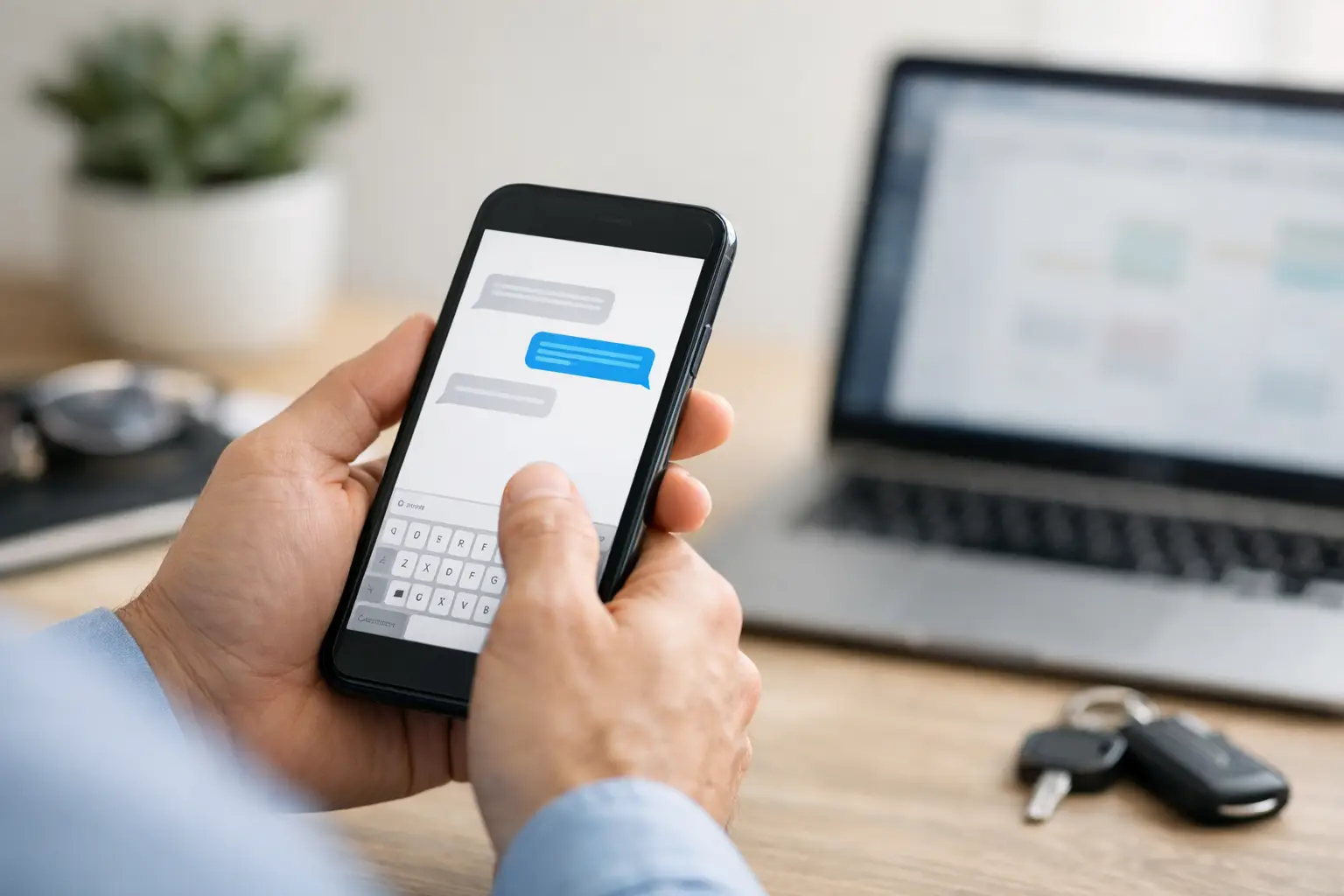
A customer who has already trusted you with a haircut, boiler repair, treatment or consultation should not have to remember when to come back. Customer rebooking text messages give them a useful prompt at the right moment, while keeping your diary healthier without constant chasing.
For a small business, repeat bookings are rarely about clever sales tactics. They come from being easy to return to. A short, relevant message can remind a customer of the value they received, remove the friction of booking again and show that your business is organised enough to remember them.
The difference is in the detail. A message that feels like a generic blast gets ignored. One that arrives at a sensible time, uses the right customer information and offers a clear next step is a service touchpoint, not a nuisance.
Why customer rebooking text messages work
Text messages are direct, familiar and quick to act on. Unlike an email that may sit unopened in an inbox, an SMS is usually seen within minutes. That makes it particularly useful for services with natural return cycles: beauty appointments, dental hygiene, vehicle servicing, fitness sessions, maintenance work, hospitality offers and professional follow-ups.
More importantly, a rebooking message reaches people after they already know what you do. You are not asking a cold audience to take a chance. You are making it simpler for an existing customer to continue a relationship that started well.
That does not mean every customer should receive the same prompt. A plumber may only need to contact a customer before an annual boiler service. A barber might send a message three or four weeks after an appointment. A massage therapist may work with a recommendation based on the treatment booked. The best timing follows the way your service is actually used.
Start with the booking cycle, not the message
Before writing a single text, decide what a successful return looks like for each service. Look at your last few months of appointments and ask when customers typically come back, when they should come back and when they tend to disappear.
There is often a gap between those answers. Someone might usually wait eight weeks for a colour appointment, but a friendly prompt in week six gives them time to find a suitable slot. A trades business may find that an annual maintenance reminder works best a month before the due date, particularly if customers have busy household schedules.
Your system should reflect this pattern. Set different triggers for different services rather than relying on one broad rule for everybody. If that feels too complicated to manage manually, it is exactly the sort of practical workflow a tailored CRM or booking system should handle in the background.
The aim is not to send more messages. It is to send fewer messages that have a reason to exist.
What a good rebooking text should say
The strongest messages are short enough to read at a glance. They remind the customer who you are, give a relevant reason to book and make the next action obvious. Avoid turning the text into an advert packed with offers, exclamation marks or unnecessary detail.
A useful format is simple: a personal greeting, a timely reason for getting back in touch, and one clear way to book. For example:
> Hi Sarah, it is nearly time for your next skin treatment at Willow Studio. We have a few appointments available next week. Reply BOOK and we will find a time that suits you.
For a service with a fixed cycle, you could say:
> Hi James, your annual boiler service is due next month. Would you like us to reserve a convenient slot? Reply YES and we will send available dates.
Both messages work because they are specific and low effort. The customer is not being asked to search for your website, remember what they last booked or write a long response. They can take the next step in seconds.
If you include a booking link, make sure it opens to the right service or booking page where possible. Sending someone to a generic homepage creates an extra decision at the exact point you want the process to feel easy.
Keep the tone human
Automation should remove admin, not personality. Use the business name customers recognise and write in the same voice they would hear at the counter, on the phone or in WhatsApp. For many local businesses, a warm and straightforward message will outperform overly polished copy.
Personalisation helps, but it must be accurate. First name, previous service and a relevant due date are useful. Guessing at needs or referring to old information can make a business look careless. If your customer records are incomplete, start with messages that are still valuable without relying on uncertain data.
Timing, frequency and consent
The right timing depends on the customer and the service, but there are a few sensible boundaries. Send during normal waking hours, avoid repeated prompts close together, and stop the sequence once a customer has booked. A customer who has already taken action should never receive a second message telling them to do the same thing.
For most businesses, one initial reminder followed by one gentle follow-up is enough. If there is no response after that, give the customer space. Repeated messaging may fill a quiet slot in the short term, but it can also create opt-outs and damage the goodwill that brings customers back over years.
You also need permission to send marketing texts. Keep a clear record of how customers opted in, identify your business in each message and make opting out straightforward. Transactional reminders, such as an upcoming appointment notification, may be treated differently from promotional messages, so make sure your process reflects the type of communication you are sending and the current UK rules that apply to your business.
A well-built system can separate these categories, record consent and remove opted-out contacts automatically. That is safer than relying on staff memory or a spreadsheet that nobody updates when the shop is busy.
Build a rebooking flow around real customer behaviour
A single text can work well. A connected flow works better because it responds to what happens next.
Imagine a salon customer who attends a colour appointment. They receive an appointment reminder beforehand, a thank-you message afterwards and, if the visit went well, a review request at the right time. Six weeks later, they receive a rebooking prompt based on the service they had. If they book, the prompts stop and the next appointment takes over. If they reply with a question, someone can respond or an AI receptionist can handle the first part of the conversation.
That is not a complicated marketing funnel. It is simply good customer service organised properly. The customer is never forced to chase, and the business team is not manually working through last month's diary every Friday evening.
EKKO Loop® is designed around this kind of lifecycle: booking intake, reminders, follow-up, review requests and overdue-customer nudges built around the way a business actually operates. The technology matters only because it gives you a dependable process without adding another difficult platform to learn.
Measure bookings, not just replies
A high reply rate can look encouraging, but the number that matters is how many customers rebook and how much repeat revenue those bookings create. Track the service type, message timing, booking method and whether a customer returned after the first or second prompt.
You may find that a message with a reply option creates more conversations but fewer completed bookings than a direct booking link. Or the opposite may be true for a high-value service where customers want to ask a question before committing. There is no universal winner. Test one variable at a time and let your actual customers show you what they prefer.
It is also worth watching no-shows and cancellations. A rebooking campaign that fills the diary with poorly qualified or inconvenient appointments is not necessarily helping. The right system should support profitable, manageable work, not just busyness.
Give customers a reason to return
The best customer rebooking text messages do not try to manufacture urgency where none exists. They arrive because there is a genuine reason to get back in touch: a treatment cycle, a service due date, a seasonal need or a simple invitation to continue something useful.
Start with one service, one sensible trigger and one message that sounds like your business. Once it is working, build from there. Small, well-timed improvements to the customer journey often do more for repeat revenue than another expensive software subscription ever will.
Need this built for your business?
EKKO builds affordable websites, custom CRMs and automated follow-up systems for small businesses, sole traders and startups. Contact us for a custom quote.
More from the EKKO Journal
Small Business Website Trends That Earn Enquiries
Small business website trends for 2026: faster pages, clearer journeys, useful automation and stronger proof that help turn enquiries into loyal customers.
Small Business Automation Trends That Pay Off
Small business automation trends are moving beyond flashy tools towards practical systems for enquiries, bookings, follow-ups, reviews and repeat trade.
Spreadsheets Versus CRM Workflows: When to Switch
Spreadsheets versus CRM workflows: learn when a spreadsheet is enough, where it creates risk, and how tailored systems save time for busy small firms.