
SMS Versus WhatsApp Customer Service Compared
SMS versus WhatsApp customer service: compare reach, speed, cost and conversation quality to choose the right channel for your small business with care.
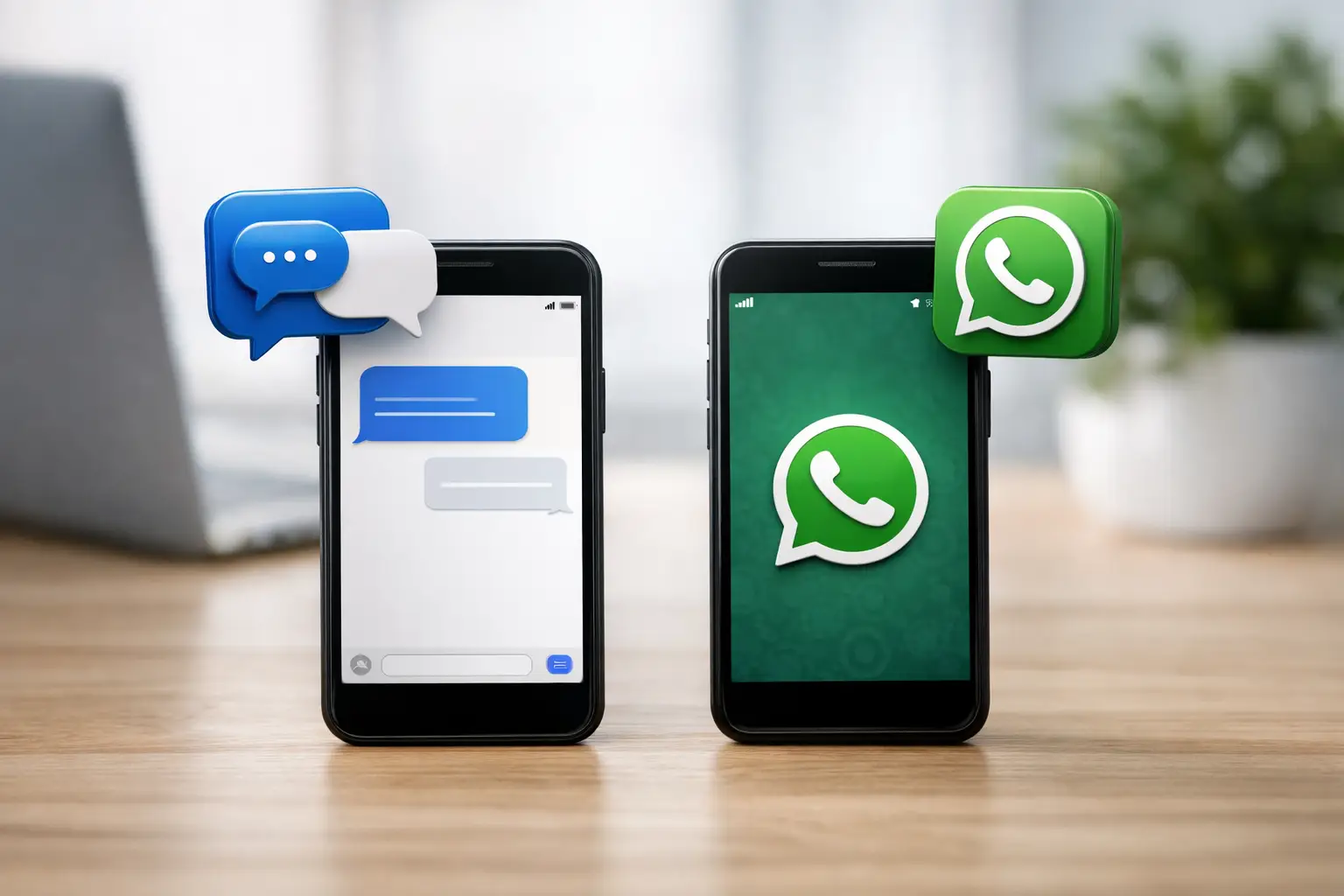
A missed booking enquiry at 4.45pm can become an empty slot tomorrow morning. A reminder that arrives too late can become a no-show. For service businesses, SMS versus WhatsApp customer service is not really a question of which app is more fashionable. It is about which message will reach the customer, prompt the right action and fit naturally into the way your business works.
The answer is rarely one channel for everything. SMS is often the dependable option for urgent, simple messages. WhatsApp can create warmer, more useful conversations when a customer needs help, photos, documents or a quick reply. The sensible choice starts with the moment in the customer journey, not the technology.
SMS versus WhatsApp customer service: the practical difference
SMS is built for reach. A customer does not need to download anything, create an account or have mobile data available to receive a text. For a plumber confirming an arrival window, a salon reminding someone of a booking, or a clinic asking a customer to complete a form, that simplicity matters.
WhatsApp is built for conversation. It gives customers a familiar chat experience where they can send a voice note, share a picture of a problem, receive a location pin or ask a follow-up question without moving to email. It feels less like a broadcast and more like speaking to a business directly.
That difference changes how each channel should be used. SMS is usually best when the message is short and time-sensitive. WhatsApp earns its place when the customer needs context, reassurance or an easy way to respond.
Where SMS does its best work
SMS remains one of the strongest tools for operational messages. It is direct, visible and inclusive of customers who do not use WhatsApp regularly. It also suits messages that need only one clear action: confirm, pay, arrive, reschedule or call back.
Consider a trades business with jobs booked across a busy day. A text saying, “Your engineer is due between 10am and 12pm. Reply Y to confirm,” is hard to misunderstand. The customer sees it without hunting through an inbox or opening a social app. For an appointment-led business, a well-timed SMS reminder can protect revenue more effectively than another marketing campaign.
SMS is particularly useful for booking confirmations, appointment reminders, payment prompts, collection notifications, short delivery updates and urgent changes. If a customer needs to know something quickly, it is normally the safer default.
The limitation is depth. Long SMS messages become awkward, links can feel impersonal or suspicious, and a multi-message exchange can quickly become difficult for your team to manage. A text is excellent at getting attention. It is less effective at handling a detailed enquiry.
Where WhatsApp gives better customer service
WhatsApp works well when service depends on a real exchange. A beauty therapist can answer questions about treatments before a booking. A builder can ask for photos before arranging a visit. A restaurant can confirm dietary requirements. An accountant can request a document without turning the process into a long email chain.
For the customer, this feels easy because it mirrors how they already communicate with friends and family. They can reply when convenient, rather than waiting on hold or composing a formal email. For a small business, the benefit is not simply speed. It is the ability to resolve more of the enquiry in one place.
The channel also supports richer information. You can send images, short videos, PDFs, addresses and catalogue-style details where appropriate. That can reduce back-and-forth, especially for businesses where customers struggle to describe what they need.
There is a trade-off. WhatsApp is not universal in the same way as SMS. Some customers do not use it, prefer not to use it for business, or have notifications switched off. It is also not a free pass to message people whenever you like. Customer consent, clear expectations and WhatsApp’s business messaging rules still matter.
Reach matters, but context matters more
It is tempting to choose SMS because it reaches almost everyone, or WhatsApp because it looks more modern. Both arguments miss the operational question: what needs to happen next?
If the goal is to prevent a no-show, use the shortest route to a confirmation. That will often be SMS. If the goal is to qualify a new enquiry, collect photos and offer suitable times, WhatsApp may save your team several calls.
A customer’s preference should carry weight too. Someone who contacted you through WhatsApp has indicated that chat is comfortable for them. Someone who booked through a simple website form may appreciate a text confirmation without needing to join another conversation. Good service means meeting customers where the interaction makes sense, while keeping the experience consistent behind the scenes.
Cost is more than the price of a message
Small businesses should compare the full cost, not only the per-message rate. SMS costs are generally straightforward, particularly for automated reminders sent in volume. WhatsApp business messaging has its own pricing structure and policy requirements, and may require a proper business platform rather than a personal mobile phone account.
But the biggest cost is often staff time. If WhatsApp lets a receptionist resolve an enquiry in three messages rather than a ten-minute phone call, it may be the better-value channel. If an automated SMS reminder prevents two missed appointments a week, its return can be immediate.
The wrong setup creates hidden expense. A shared mobile phone with no records, inconsistent replies and messages answered after hours can damage trust regardless of channel. Messages should feed into a system your team can see, manage and follow up. Otherwise, customer communication becomes another disconnected tool to check.
Use each channel at the right point in the journey
A practical setup usually combines both channels without making the customer work harder. Start with the workflow you already have: enquiry, booking, reminder, service delivery, feedback and rebooking.
For example, an automated SMS can confirm that an appointment is booked and send a reminder the day before. If the customer replies with a question, the team can continue in the channel they prefer. A WhatsApp receptionist can handle first enquiries, ask a few useful questions and offer available slots. After the work is complete, a short WhatsApp message might make it easy to send aftercare instructions or request private feedback.
This is the thinking behind customer-lifecycle systems such as EKKO Loop®: not adding messages for the sake of it, but placing the right prompt at the point where it removes friction. A reminder is useful. Three reminders, a follow-up and a sales message in the same day are not.
Keep consent and trust at the centre
Customers are more open to useful communication than promotional noise. Tell them what messages they will receive when they book, and make it clear how they can opt out. Keep marketing separate from essential service messages wherever possible. A change to an appointment is different from a monthly offer, and customers should feel that difference.
Store contact details responsibly, limit access within your business and keep a clear record of preferences. If you use automation or an AI receptionist, make sure handover to a person is simple when the issue is sensitive, complicated or urgent. Automation should reduce waiting, not make customers feel trapped in a script.
Tone matters here as much as compliance. Use your business name, write plainly and avoid vague messages that make people wonder whether a text is genuine. A customer who trusts your communication is more likely to confirm, reply and return.
A simple decision for busy teams
Choose SMS first when reliability and immediacy are the priority. Choose WhatsApp first when the conversation needs detail, media or a more personal exchange. Use both when your customer journey has different needs at different stages.
Before investing in either, look at last week’s enquiries. Where did customers stop replying? Which bookings turned into no-shows? How many calls were simply requests for information that could have been answered automatically? Those answers will tell you far more than a feature list.
The best customer messaging setup should feel almost invisible to the customer: a useful reminder when they need one, a quick answer when they have a question, and a straightforward route back to your business when they are ready to book again.
Need this built for your business?
EKKO builds affordable websites, custom CRMs and automated follow-up systems for small businesses, sole traders and startups. Contact us for a custom quote.
More from the EKKO Journal
Small Business Website Trends That Earn Enquiries
Small business website trends for 2026: faster pages, clearer journeys, useful automation and stronger proof that help turn enquiries into loyal customers.
Small Business Automation Trends That Pay Off
Small business automation trends are moving beyond flashy tools towards practical systems for enquiries, bookings, follow-ups, reviews and repeat trade.
Spreadsheets Versus CRM Workflows: When to Switch
Spreadsheets versus CRM workflows: learn when a spreadsheet is enough, where it creates risk, and how tailored systems save time for busy small firms.