
Website Redesign That Brings More Bookings
A website redesign should do more than refresh your look. Build a clearer route from first visit to booking, reviews and repeat custom with less admin.
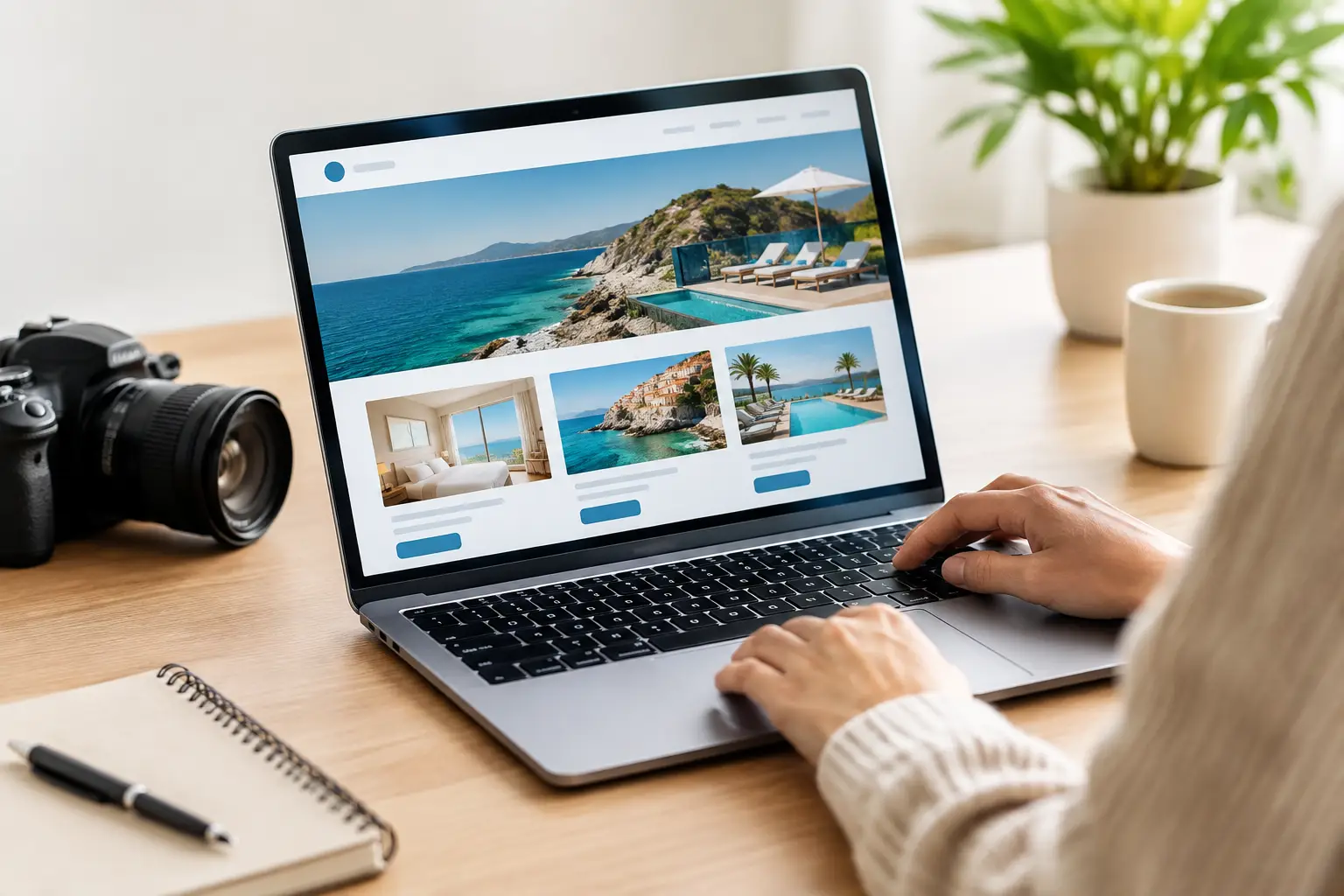
A customer has found your business, checked a few photos and is ready to ask a question. Then they hit a slow contact form, cannot see your availability, or have no idea what happens after they enquire. That is where a website redesign earns its keep. It is not a new coat of paint. It is a chance to remove the small points of friction that quietly cost bookings, calls and repeat custom.
For a small business, the website should work like a dependable member of the team. It should explain what you do, make you credible, guide people towards the next step and pass the right information into the way you already run the business. If it only looks better, it has missed most of the opportunity.
Start a website redesign with the business problem
A redesign is often triggered by a dated logo, an old template or a competitor with a smarter-looking site. Those are fair reasons to take action, but they are not enough to shape the project.
Start with where customers and staff lose time. A salon might be receiving appointment requests through Instagram, text messages and a basic contact form, with no consistent way to follow up. A trades business may get plenty of enquiries but waste time answering questions that could be clear on the website. A consultant may have a polished homepage but no simple route for a prospective client to book a discovery call.
The right solution depends on the problem. If your main issue is trust, stronger case studies, clear service pages and recent reviews may matter most. If leads are being missed, the priority could be a better enquiry journey, automatic acknowledgement and a dashboard that keeps everything in one place. If repeat bookings are weak, the website needs to connect with the messages that happen after the service is delivered.
Before discussing layouts, write down three things: how people find you, what they need before they contact you, and what your team has to do once they do. This turns a subjective design conversation into a practical plan.
Make the next step obvious
People rarely visit a small-business website to admire the interface. They want to know whether you can help, roughly what to expect and how to take the next step.
That means each important page needs one clear job. A service page might encourage a quote request. A restaurant page may point visitors to a table booking. A beauty business could encourage appointment booking, while leaving room for a quick WhatsApp question from customers who are not ready to commit.
Choice is useful up to a point. Too many buttons, forms and competing calls to action create hesitation. A visitor should not have to decide between “Get in touch”, “Learn more”, “Contact us”, “Request information” and “Book now” when all they really want is to ask whether you cover their area.
Use language your customers use. “Get a fixed-price quote” is clearer than “Submit an enquiry”. “Book your consultation” is more helpful than “Contact us”. The wording should reflect the real commitment being made, not agency jargon.
A good enquiry form also respects people’s time. Ask for the details needed to qualify and respond properly, but do not turn a first contact into paperwork. For some services, name, contact details, location and a short description are enough. For others, a guided quote form may be worthwhile because it prevents back-and-forth later.
Design for trust before persuasion
Small businesses are often chosen on confidence as much as price. Customers need to feel that you are established, responsive and straightforward to deal with. Your website can create that reassurance quickly, or undermine it just as quickly.
Show real work wherever possible. Original photographs, completed projects, team introductions and specific testimonials carry more weight than generic stock imagery and broad claims. A review that says what was done, why it mattered and how the customer felt afterwards is far more convincing than a row of anonymous five-star icons.
Practical details matter too. Display your service areas, opening hours, response expectations and the simplest route to contact you. If you offer fixed pricing or an initial call, say so. If every job is quoted individually, explain why. Being clear about the process does not weaken the sale. It filters out poor-fit enquiries and makes good-fit customers more comfortable getting in touch.
Premium design still has a role here. Good spacing, legible type, consistent imagery and a mobile-first layout signal care. But premium does not mean overdesigned. Animation, oversized video and clever effects can slow down a site or distract from the essentials. A local service business needs a site that feels considered and fast, not one that makes visitors wait to see a headline.
Connect the website to the work behind it
The most valuable website redesigns do not end when a form is submitted. They improve what happens next.
When an enquiry arrives, can the right person see it quickly? Does the customer receive a helpful acknowledgement? Is there a prompt to follow up if no one has replied within a set time? Can booked customers receive reminders without your team sending every message manually?
These are operational questions, but they should shape the website from the start. A booking form can feed directly into a CRM. A quote request can create a task and trigger a confirmation message. An AI-powered WhatsApp receptionist can handle common early questions and collect details outside working hours, while making it clear when a person will take over.
For businesses built on repeat custom, the journey should continue after the appointment or job. A well-timed message can ask for feedback, request a Google review from happy customers, or invite them to rebook when the time is right. This is not about bombarding people with automation. It is about making reliable follow-up easier to deliver.
EKKO approaches this as one connected system: a professional front end for customers and practical workflows for the people doing the work. That may include a website, customer dashboard, booking process and follow-up sequence, but only where each part solves a genuine problem.
Protect what already works during a website redesign
A new website can damage performance if the rebuild ignores the existing site. Pages that appear in Google, useful old content, established URLs and tracking data all need attention before launch.
Begin with an audit. Identify your pages that generate enquiries, receive traffic or answer common customer questions. Keep the useful content, improve it where needed and make sure old page addresses redirect properly to their new equivalents. Removing a page simply because it looks untidy can mean losing a valuable source of local search visibility.
Speed and mobile usability deserve equal attention. Most local customers will first see your website on a phone, often while they are between jobs, commuting or comparing options quickly. Buttons should be easy to tap, forms should be short enough to complete, and key information should not be buried behind decorative elements.
You should also retain clear measurement. Track the actions that matter: completed booking forms, calls, WhatsApp conversations, quote requests and purchases. Page views alone cannot tell you whether the redesign is helping the business. A quieter site that produces better enquiries can be a stronger result than a busy one that generates little real work.
Choose the right level of custom build
Not every business needs a fully bespoke platform. A straightforward brochure site with stronger messaging and a reliable contact journey may be exactly right for a sole trader. A growing clinic, restaurant group or service business with several staff may benefit from integrated booking, customer records, reminders and reporting.
Templates can offer a fast, affordable starting point, especially when the business model is simple. The trade-off is that they can force your process to fit the software. Bespoke work gives more control over the customer journey and the operational workflow, but it needs a clear scope and a builder who understands how the business actually works.
The goal is not to add technology for the sake of it. It is to replace scattered tools and manual chasing with something your team can use confidently. Premium feel, no agency prices, and nothing more than the business needs.
Treat launch as the beginning of improvement
A website should not be left untouched for three years after launch. In the first few weeks, watch where enquiries come from, how customers use forms and which questions still reach your inbox. Those details reveal what needs refining.
You may find that customers want pricing guidance earlier, that one service deserves its own page, or that most mobile visitors prefer WhatsApp to a form. These are useful findings, not failures. A well-built site gives you a stable foundation to make sensible improvements without starting again.
The best time to plan a website redesign is before your current process becomes a daily frustration. Build around the way you work now, leave room for the business you want to become, and make every customer action easier than the one before it.
Need this built for your business?
EKKO builds affordable websites, custom CRMs and automated follow-up systems for small businesses, sole traders and startups. Contact us for a custom quote.
More from the EKKO Journal
Best Digital Tools for Tradespeople in 2026
The best digital tools for tradespeople reduce missed calls, speed up quotes and keep jobs, payments and reviews moving without extra admin each week.
Is CRM Necessary for Your Small Business?
Is CRM necessary for a small business? Learn when it saves time, when a simple system is enough, and how to choose tools that match your daily workflow.
How to Digitise Job Sheets Without Slowing Down
Learn how to digitise job sheets with a practical workflow for field teams, faster invoicing, clearer records and less admin every working day on site.