
Why Do Customers Miss Appointments? 8 Real Reasons
Why do customers miss appointments? Learn the practical causes of no-shows and how clear booking, reminders and follow-up can protect your valuable time.
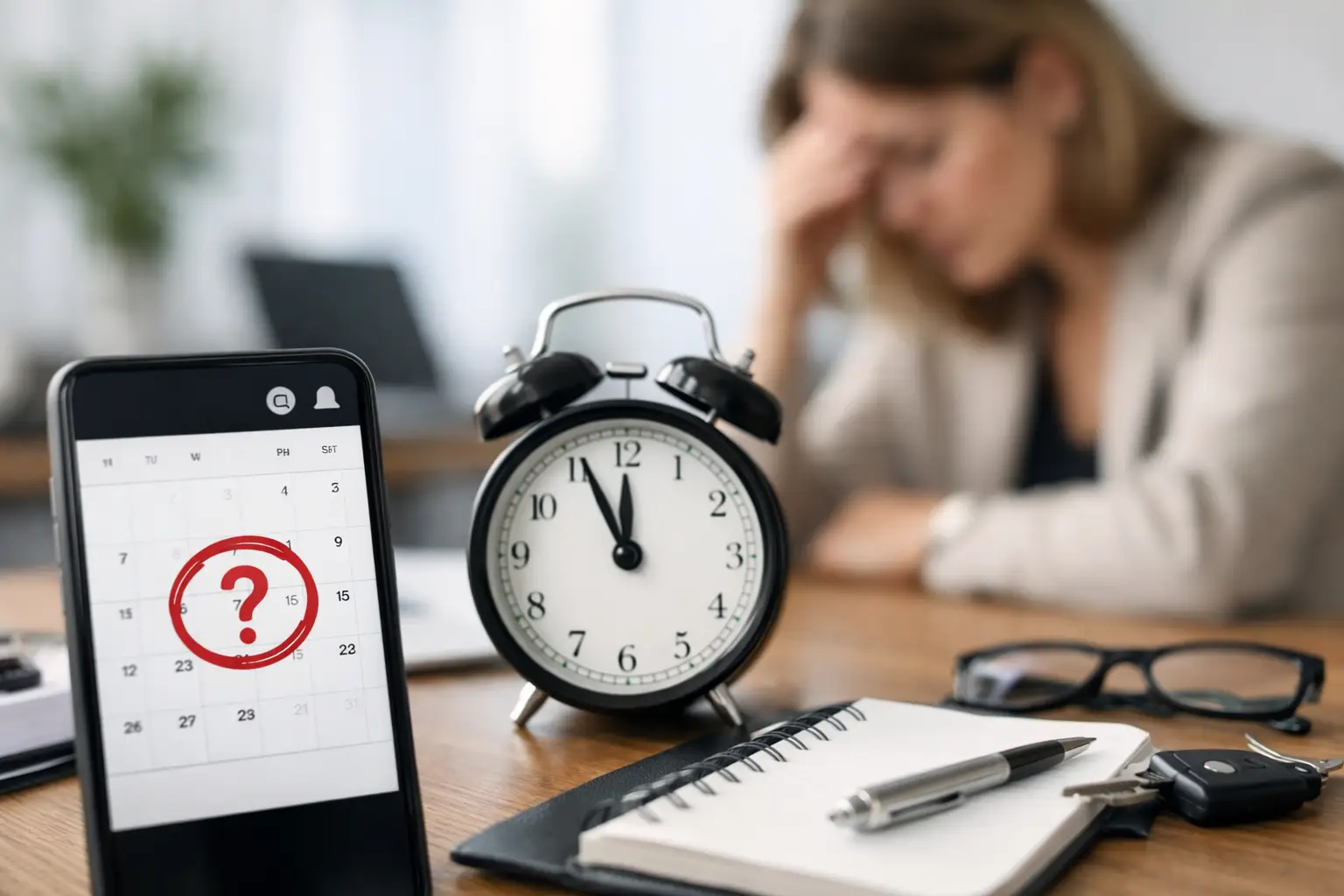
A 10am gap is rarely just an empty slot. For a salon, clinic, tradesperson or consultant, it can mean lost income, a member of staff waiting around, and a day that suddenly stops adding up. So why do customers miss appointments? Usually, it is not because they do not value your service. More often, the booking process has left too much for them to remember, interpret or act on themselves.
The useful question is not whether no-shows can be eliminated completely. They cannot. The question is whether your business makes attendance easy, and whether the right action happens when plans change. A practical system can reduce preventable gaps without making customers feel chased.
Why Do Customers Miss Appointments in the First Place?
They simply forget
Customers are juggling work, school runs, deliveries, family commitments and their own appointments. A booking made three weeks ago may feel important at the time, then disappear under everything else. This is particularly common with recurring services, consultations and bookings made over the phone, where there is no obvious digital record to return to.
A reminder is not a luxury here. It is customer service. A short message with the date, time, location and a clear confirmation option turns a vague intention into a firm plan. For most businesses, one reminder 24 to 48 hours before the appointment, followed by a final prompt on the day where appropriate, is a sensible starting point.
The timing depends on the service. A restaurant reservation may need a same-day reminder; a longer beauty treatment, assessment or home visit may benefit from earlier notice so the customer has time to rearrange properly.
Booking details were unclear or hard to find
A customer may believe they know when they booked, only to confuse Tuesday with Thursday, mix up the address, or overlook parking instructions. For a mobile service, they may not know the arrival window or what needs to be prepared before you arrive.
The confirmation message should do more than say, “You are booked in.” It should state the service, date, time, address or meeting link, expected duration, preparation requirements and the simplest way to reschedule. Keep it readable on a phone. Long paragraphs, buried policy wording and attachments that do not open easily all create friction at the exact moment clarity matters.
This is one reason a custom booking workflow often performs better than a collection of disconnected tools. The details customers need should arrive automatically, in one message, from the channel they actually check.
Rescheduling feels more difficult than not turning up
This is one of the most preventable causes of missed appointments. A customer realises they cannot attend, but the only option is to ring during business hours, leave a voicemail, or search through old emails for the right contact details. They put it off. Then the appointment time passes.
Give customers a simple route to rearrange or cancel. A reply-to message, a direct booking option or a clearly stated contact route can make the difference. You do not need to make cancellation effortless at any cost, particularly for high-value appointments, but the process must be proportionate. If it takes less effort to disappear than to tell you, some people will disappear.
The appointment did not feel committed
People are more likely to attend when they have made a small commitment. That might be choosing a precise slot, completing an intake form, receiving a personal confirmation, or paying a deposit where it is fair and appropriate.
Deposits are not the answer for every business. They can protect revenue for long appointments with limited availability, but may deter a first-time customer booking a low-cost service. Consider the value of the slot, your waiting list, your margins and the relationship you want to build. A clear, consistently applied policy matters more than a harsh one.
Life changed after they booked
Some missed appointments are unavoidable. A child is unwell, a shift changes, a car breaks down, or an urgent job comes in. Treating every absence as bad behaviour can damage a relationship that might otherwise become a repeat customer.
The distinction to make is between a genuine one-off disruption and a repeated pattern. Your process should be understanding by default but structured enough to identify frequent late cancellations, repeat no-shows and customers who continually book prime slots without attending.
Your messages are going to the wrong place
An old phone number, mistyped email address or messages landing in junk folders can make a well-designed reminder system useless. If staff take bookings manually, details may be copied into a calendar but never added to the customer record used for follow-up.
Build a quick contact check into the booking journey. Ask for the preferred mobile number and confirm it back to the customer. If your audience responds faster on WhatsApp than email, use that behaviour rather than hoping they will check an inbox. The best channel is the one your customers reliably see.
There is no perceived consequence
If a customer has missed before and nothing changes, they may assume the slot has little value. This does not mean every business needs punitive fees. It means expectations should be plain before the booking is confirmed.
Explain your notice period in straightforward language and apply it consistently. Where a charge is necessary, say why: the slot was reserved, and late notice makes it difficult to offer it to another customer. Customers are generally more reasonable when the policy is clear, visible and not introduced as a surprise after the event.
The business did not follow up after silence
When someone misses an appointment, many small businesses either send an irritated message or say nothing at all. Neither response helps much. The customer may have made a genuine mistake, or they may be embarrassed and assume they are no longer welcome.
A calm follow-up can recover the relationship and the revenue. For example: “We missed you today. If you would still like to book, reply here and we will help you find a suitable time.” For repeat no-shows, your next step can be more structured, such as requiring a deposit or limiting booking access to certain slots.
Turn Fewer No-Shows Into a Better Booking Process
Start by looking at your last 20 missed appointments. Do not just count them. Look for the pattern. Were they new customers or regulars? Were reminders sent? How far in advance did they book? Did they come from one booking channel, service type or day of the week?
This tells you where to focus. If people miss appointments booked by phone, improve the confirmation process. If customers frequently cancel too late, send the reminder earlier and make rearranging simpler. If first-time consultations have the highest no-show rate, an intake form or modest deposit may create the right level of commitment.
Then make the customer journey consistent. Every booking should trigger the same basic sequence: confirmation immediately, a timely reminder, an easy way to reschedule, and a measured follow-up if they do not attend. Staff should not have to remember each step manually, especially during a busy service day. Manual follow-up is often the first task to slip when the business is doing well.
Automation is useful because it protects the routine, not because it makes your business feel less personal. A message can still use the customer's name, refer to their service and come from your business number. The difference is that it arrives on time every time, including when you are with a customer, on a job or finishing up for the evening.
For businesses with several services, staff members or locations, keep the rules flexible. A 15-minute call does not need the same reminder sequence as a two-hour treatment or a site visit across town. Build around the way you work, nothing more. EKKO Loop® is designed around these practical stages, from booking intake and reminders to missed-appointment follow-up and rebooking prompts.
Protect the Slot Without Losing the Customer
No-show reduction works best when it respects both sides of the booking. Your time has value, and customers need a process that is clear, forgiving when life gets in the way, and easy to use on a busy day.
A well-timed reminder will not prevent every empty slot. What it does is remove the avoidable reasons customers miss appointments, give them a simple chance to change plans, and give your business a better opportunity to fill the space. That is a more reliable way to grow than simply working harder around gaps in the diary.
Need this built for your business?
EKKO builds affordable websites, custom CRMs and automated follow-up systems for small businesses, sole traders and startups. Contact us for a custom quote.
More from the EKKO Journal
Small Business Website Trends That Earn Enquiries
Small business website trends for 2026: faster pages, clearer journeys, useful automation and stronger proof that help turn enquiries into loyal customers.
Small Business Automation Trends That Pay Off
Small business automation trends are moving beyond flashy tools towards practical systems for enquiries, bookings, follow-ups, reviews and repeat trade.
Spreadsheets Versus CRM Workflows: When to Switch
Spreadsheets versus CRM workflows: learn when a spreadsheet is enough, where it creates risk, and how tailored systems save time for busy small firms.